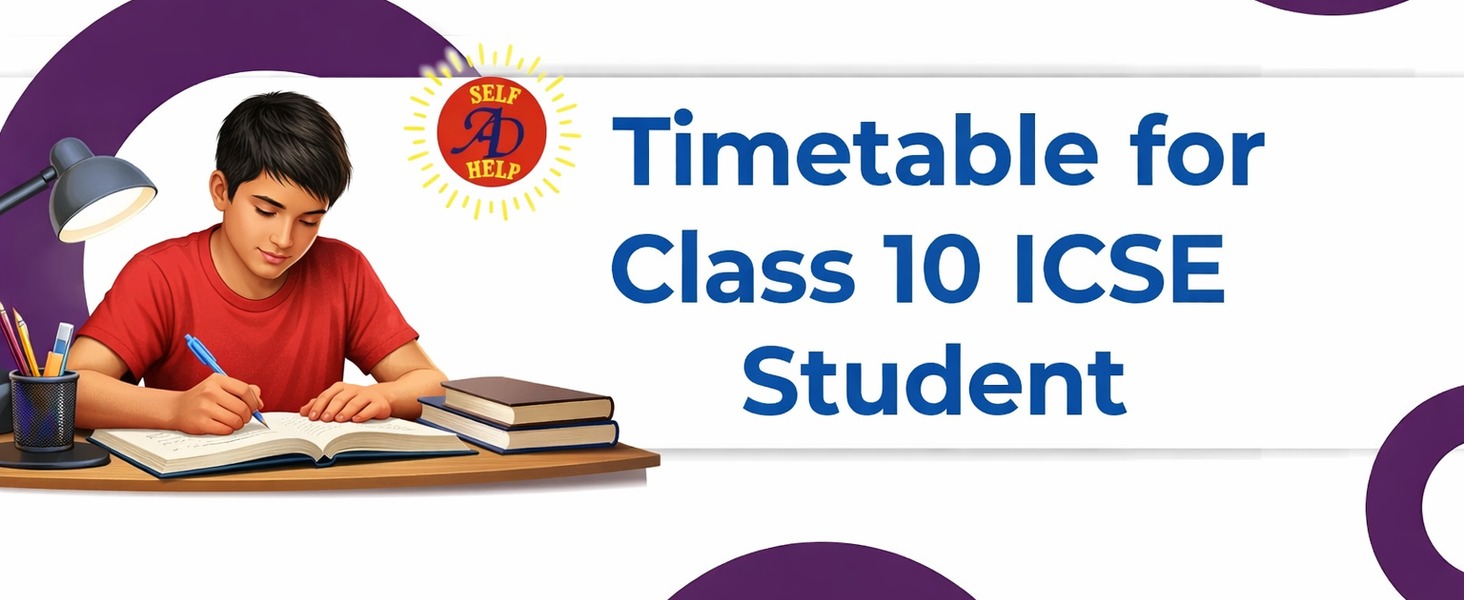
Timetable for Class 10 ICSE Student
Class 10 ICSE is one of the most important academic years in a student’s life. The syllabus is vast, expectations are high, and consistent preparation is essential. One of the biggest reasons students struggle is not lack of ability—but lack of a proper timetable.
A well-planned timetable helps students manage time, reduce stress, and study effectively without burnout. Instead of studying randomly, a structured routine ensures balanced preparation for all subjects while maintaining health and focus.
This blog explains how to create and follow an effective timetable for a Class 10 ICSE student, along with sample routines and practical tips.
Why a Timetable Is Essential for ICSE Class 10
ICSE exams test:
- Conceptual understanding
- Application of knowledge
- Writing skills and presentation
- Consistency across subjects
Without a timetable:
- Students overfocus on favourite subjects
- Weak areas remain ignored
- Revision becomes last-minute and stressful
A timetable helps you:
- Study all subjects regularly
- Track progress
- Build discipline
- Improve retention through revision
Key Principles Before Making a Timetable
Before designing a timetable, keep these rules in mind:
- Be realistic – Don’t plan 10–12 study hours daily.
- Balance subjects – Mix theory and numerical subjects.
- Include revision time – Revision is as important as learning.
- Allow breaks – Short breaks improve concentration.
- Maintain consistency – Same routine daily builds habit.
Ideal Daily Study Time for Class 10 ICSE
On school days: 4–6 hours
On weekends/holidays: 6–8 hours
Quality matters more than quantity.
Sample Daily Timetable (School Day)
Morning (Best for Concentration)
- 5:30 – 6:00 AM → Wake up & freshen up
- 6:00 – 7:30 AM → Study numerical subject (Maths / Physics)
- 7:30 – 8:00 AM → Breakfast & school preparation
Why morning study works:
The mind is fresh, distractions are minimal, and problem-solving ability is highest.
After School
- 4:30 – 5:00 PM → Rest / snack / relaxation
- 5:00 – 6:30 PM → Theory subject (Biology / History / Geography)
- 6:30 – 6:45 PM → Break
Evening
- 6:45 – 7:45 PM → Practice subject (Maths / Chemistry / Computer)
- 7:45 – 8:15 PM → Dinner
Night
- 8:15 – 9:00 PM → Revision (formulas, definitions, diagrams)
- 9:00 – 9:30 PM → Light reading / planning for next day
- 10:00 PM → Sleep
Adequate sleep is essential for memory and focus.
Weekly Subject Distribution
A good timetable ensures every subject is revised at least twice a week.
Example:
- Mathematics – Daily (practice + revision)
- Physics – 3 days/week
- Chemistry – 3 days/week
- Biology – 3 days/week
- Geography – 2 days/week
- Computer Applications – 2 days/week
- Languages – Alternate days
Timetable During Exam Preparation / Pre-Boards
When exams are near, adjust your timetable:
- Reduce new learning
- Increase revision and practice
- Add mock tests
Sample Exam-Time Day
- Morning → Revise one full chapter
- Afternoon → Solve sample paper
- Evening → Analyse mistakes
- Night → Light revision
Revision Timetable Strategy
Daily revision plan:
- Revise what you studied the same day
- Re-revise after 3 days
- Final revision after 1 week
This repetition strengthens long-term memory.
Tips to Stick to Your Timetable
Many students make timetables—but don’t follow them. Here’s how to stay consistent:
- Start small
- Avoid mobile distractions during study time
- Use a checklist to track tasks
- Reward yourself after completing goals
- Don’t panic if you miss one session—resume immediately
Consistency over perfection is the goal.
Balancing Study and Health
A good timetable includes:
- 7–8 hours of sleep
- Short breaks every 60–90 minutes
- Light exercise or walking
- Time for relaxation
A healthy body supports a focused mind.
Common Mistakes to Avoid
- Studying only one subject daily
- Ignoring revision
- Late-night cramming
- Overloading weekends
- No breaks or rest
A timetable should support learning—not exhaust you.
Final Thoughts
A well-planned timetable is the foundation of success for a Class 10 ICSE student. It helps manage the vast syllabus, reduces exam stress, and builds confidence through regular study and revision.
Remember:
- Study smart, not endlessly
- Be consistent, not perfect
- Balance study with rest
With discipline and the right timetable, Class 10 ICSE becomes manageable, structured, and achievable.