ICSE Marking Scheme 2026 — Complete Guide for Class 10 Students

Preparing for the ICSE board exams can feel overwhelming, especially when you’re unsure how marks are awarded. Understanding the ICSE Marking Scheme 2026 is one of the smartest ways to plan revision, manage time during the exam, and target high-scoring areas.
The marking scheme is not just about numbers — it shows you what the examiner expects, how questions are weighted, and how to earn marks even when you’re unsure of the answer. Let’s break it down in simple terms.
What Is the ICSE Marking Scheme?
The marking scheme is a system that the Council for the Indian School Certificate Examinations (CISCE) uses to assign marks to each question in the board exams.
It defines:
- How many marks each section or question carries
- What type of questions are asked (short answer, long answer, practical, projects)
- How marks are divided among sub-parts of questions
- How internal assessments and practicals contribute to final marks
In short — the marking scheme tells you where your marks come from.
Why Is It Important to Know the Marking Scheme?
A good understanding of the marking scheme helps you:
- Prioritize chapters that contribute more marks
- Plan your time in the exam hall
- Understand how detailed your answers should be
- Avoid losing easy marks due to poor answer structure
Most students focus on what to study — but the smartest students focus on how the exam evaluates what they study.
General ICSE Class 10 Marking Pattern
Although each subject has its own scheme, the overall structure remains similar. Here’s a typical division:
| Component | Approx. Marks |
| Theory (External Exam) | 70 – 80 |
| Internal Assessment / Practical / Project | 20 – 30 |
- Total usually adds to 100 marks per subject.
- Some languages may vary slightly based on internal components.
Note: Exact weightage can change based on subject and board notification.
Language Subjects (English / Second Language)
Language papers often include sections like:
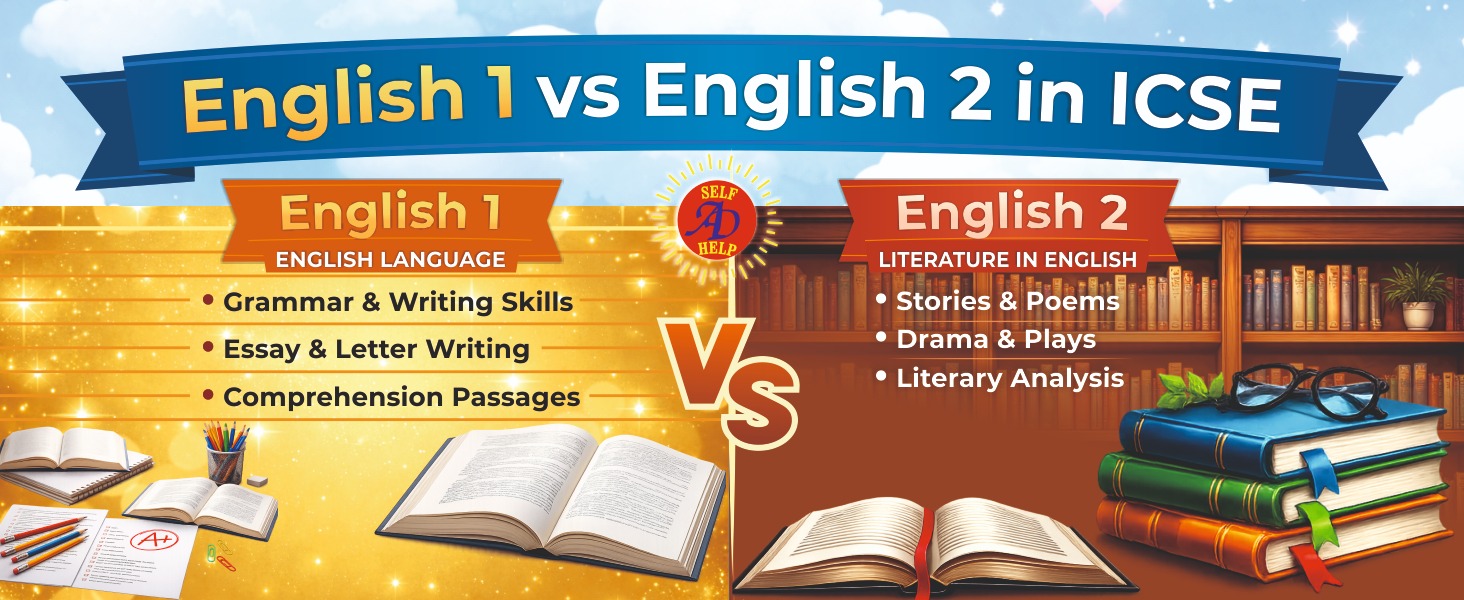
English (Paper 1 & Paper 2)
| Section | Marks |
| Composition (Essay / Letter / Functional Writing) | 20–25 |
| Comprehension | 15–20 |
| Grammar & Usage | 10–15 |
| Literature (Prose, Poetry, Drama) | 30–40 |
| Internal Assessment (if applicable) | 10–20 |
- English Paper 1 tests grammar, writing, and comprehension.
- English Paper 2 tests your knowledge of literature texts.
This blend ensures you’re evaluated on both expression and understanding.
Mathematics and Science Subjects
Subjects like Maths, Physics, Chemistry, Biology are usually divided as:
Mathematics
| Part | Marks |
| Algebra | 15–20 |
| Geometry | 15–20 |
| Mensuration / Statistics | 10–15 |
| Application / Word Problems | 15–20 |
| Internal Assessment | 10–20 |
Students should focus on step-wise solutions, clear presentation, and showing all working steps — many marks are awarded for method even if the final answer is incorrect.
Physics / Chemistry / Biology
| Component | Marks |
| Theory (Written) | 70 |
| Practical / Lab Work | 20–30 |
In science subjects:
- Diagrams are important
- Definitions and numerical steps fetch marks
- Practical skills are tested in lab-based exams
Social Studies (History, Geography, Civics)
These subjects have:
- Short answer questions
- Long answer structured questions
- Map work (especially in Geography)
- Projects / assignments
Marks are typically divided into:
| Section | Marks |
| Structured Answers | 40–50 |
| Short Answers | 20–30 |
| Map / Diagrams | 10–15 |
| Internal Assessment | 10–20 |
Students should present answers with headings, keywords, and timelines wherever needed.
Computer Applications
Computer applications usually include:
| Component | Marks |
| Theory / Written | 60–70 |
| Practical / Lab Work | 20–40 |
Programming questions may carry more marks, followed by theory, definitions, and diagrams.
Tips Based on the Marking Scheme
Understanding how marks are distributed can help you prepare smarter:
Prioritize High-Weightage Sections
Identify chapters that carry more marks and allocate more revision time to them.
Practice with Marking in Mind
Solve previous years’ papers and evaluate answers based on marks allocated for each part.
Focus on Presentation
In ICSE, how you write is almost as important as what you write. Neat steps, underlined keywords, and labeled diagrams earn marks.
Don’t Lose Marks on Easy Sections
Many students lose marks in grammar, formula recall, or simple write-ups. Don’t ignore these “easy mark” areas.
How to Use Marking Scheme During Revision
- Make a revision plan that mirrors the actual exam marking.
- Allocate revision time based on weightage, not chapter length.
- Practice full-length papers within the 3-hour time limit.
- Check your answers against the marking pattern — not just the answer key.
This transforms revision from guessing to strategic preparation.
Final Thoughts
Knowing the ICSE Marking Scheme 2026 is one of the smartest ways to plan your board exam preparation. When you understand how marks are distributed, you can study with purpose, revise with focus, and answer in the exam with confidence.
During the final stage of preparation, structured study resources that explain concepts clearly and follow the ICSE pattern can make revision faster and more effective. Reliable academic support helps you understand not just what to study, but how to score. With the right strategy and disciplined effort, students can translate their preparation into high performance in the board exams.