What Is English 1 and English 2 in ICSE?
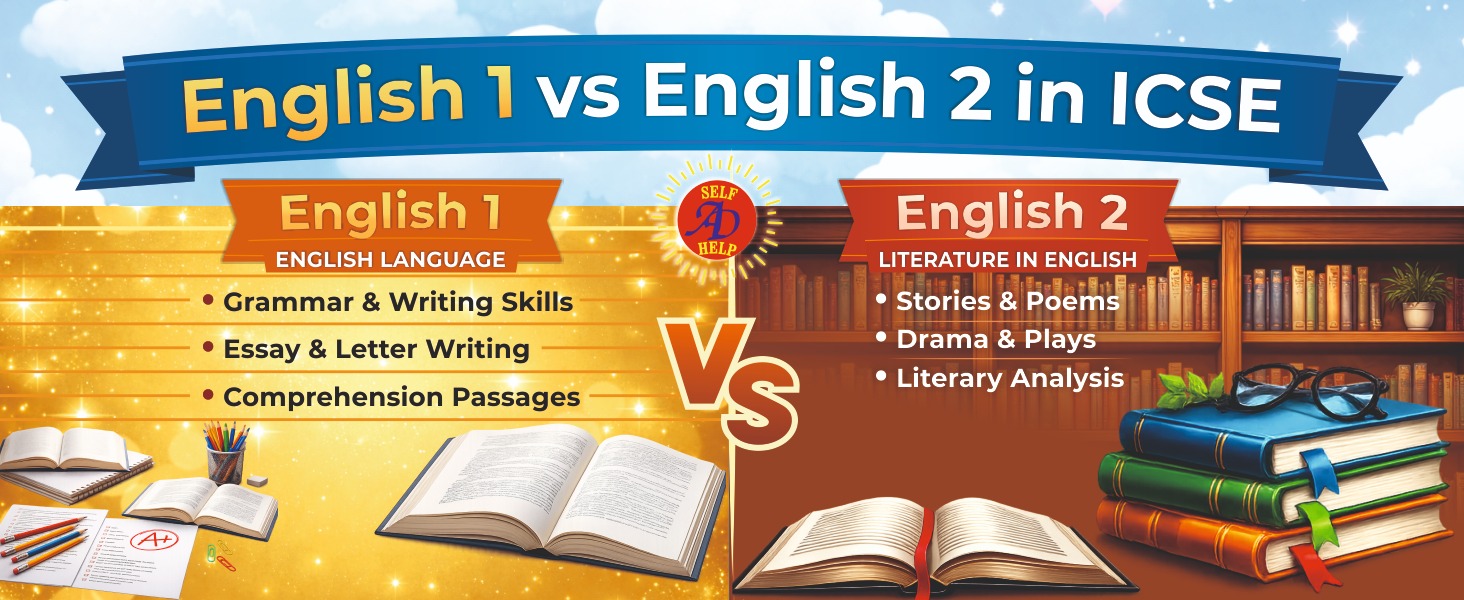
For students studying in Class 10 under the ICSE board, English is divided into two separate papers—English 1 and English 2. Many students and parents often get confused about the difference between these two papers, their syllabus, and how to prepare for them effectively. Understanding this structure clearly can help students plan their preparation better and score higher marks in the board examination.
Understanding the Structure of English in ICSE
In ICSE, English is not treated as a single subject. Instead, it is divided into:
- English Paper 1 – Language
- English Paper 2 – Literature in English
Both papers are equally important and together they test a student’s overall command of the language, writing ability, and literary understanding. Strong performance in both is essential for achieving a high overall percentage in Class 10.
English Paper 1 – Language
English 1 mainly focuses on how well a student can use the English language in practical situations. It checks writing skills, grammar accuracy, and comprehension ability rather than textbook knowledge.
Key areas covered in English 1:
1. Composition Writing
Students are asked to write an essay such as:
- Descriptive
- Narrative
- Argumentative
- Story-based
This section tests creativity, clarity of thought, and correct language usage.
2. Letter or Email Writing
This includes:
- Formal letters
- Informal letters
- Email format
Marks depend on correct format, tone, and expression.
3. Notice and Functional Writing
Students may need to draft notices or short functional pieces, which evaluate clarity and brevity.
4. Unseen Comprehension Passage
A reading passage is given with questions to test:
- Understanding
- Vocabulary
- Ability to infer meaning
5. Grammar and Usage
This includes:
- Tenses
- Prepositions
- Transformation of sentences
- Correct usage of words
Overall, English 1 measures communication skills and language correctness, which are useful not only in exams but also in real life.
English Paper 2 – Literature in English
English 2 focuses on prescribed literary texts studied during the academic year. Instead of grammar, this paper evaluates how well students understand stories, poems, and drama.
Main components of English 2:
1. Prose (Short Stories)
Students answer questions related to:
- Plot and events
- Characters
- Themes and messages
2. Poetry
Questions test:
- Meaning of lines
- Literary devices
- Emotions and themes
3. Drama (Play in the syllabus)
Students must understand:
- Dialogue and scenes
- Character relationships
- Important moments in the play
This paper requires clear interpretation, proper explanation, and well-structured answers rather than memorized grammar rules.
Major Differences Between English 1 and English 2
| English 1 (Language) | English 2 (Literature) |
| Focuses on grammar, writing, and comprehension | Focuses on stories, poems, and drama |
| Tests practical communication skills | Tests interpretation and understanding |
| No textbook learning required | Based completely on prescribed books |
| Creativity and language accuracy are important | Explanation and textual knowledge are important |
In simple terms:
- English 1 teaches you how to write English correctly.
- English 2 teaches you how to understand and explain literature.
Why Both Papers Are Important
Many students think one paper is easier than the other, but both play a crucial role in scoring well in ICSE:
- English 1 helps build strong grammar and writing confidence.
- English 2 improves reading ability, imagination, and analytical thinking.
Together, they create a complete foundation in the English language, which is extremely valuable for higher studies, competitive exams, and future careers.
Simple Preparation Tips for Students
- Practice essay and letter writing regularly for English 1.
- Revise grammar rules and comprehension techniques.
- Read literary texts carefully and understand themes, characters, and key lines for English 2.
- Write answers in clear, well-structured sentences.
- Solve previous years’ question papers to understand the pattern.
Consistent practice in both papers can significantly increase overall marks in ICSE English.
Conclusion
English in ICSE is carefully divided into English 1 (Language) and English 2 (Literature) so that students develop both strong communication skills and deep literary understanding. While one paper builds grammar, writing, and comprehension ability, the other strengthens interpretation, critical thinking, and appreciation of texts—together forming a complete foundation in English that supports success in higher studies and future careers.
For students aiming to prepare in a more structured, exam-focused, and confident way, reliable study support can make a meaningful difference. The Arundeep Self‑Help series is trusted by many ICSE learners for clear explanations, systematic practice, and guidance aligned with the latest syllabus. With consistent effort and the right learning resources, students can approach both English papers with confidence and achieve excellent results in their ICSE board examinations.